
Home » Blogs » Water Purifier Technology and Maintenance » How Often Should Water Purifier Filters Be Changed?
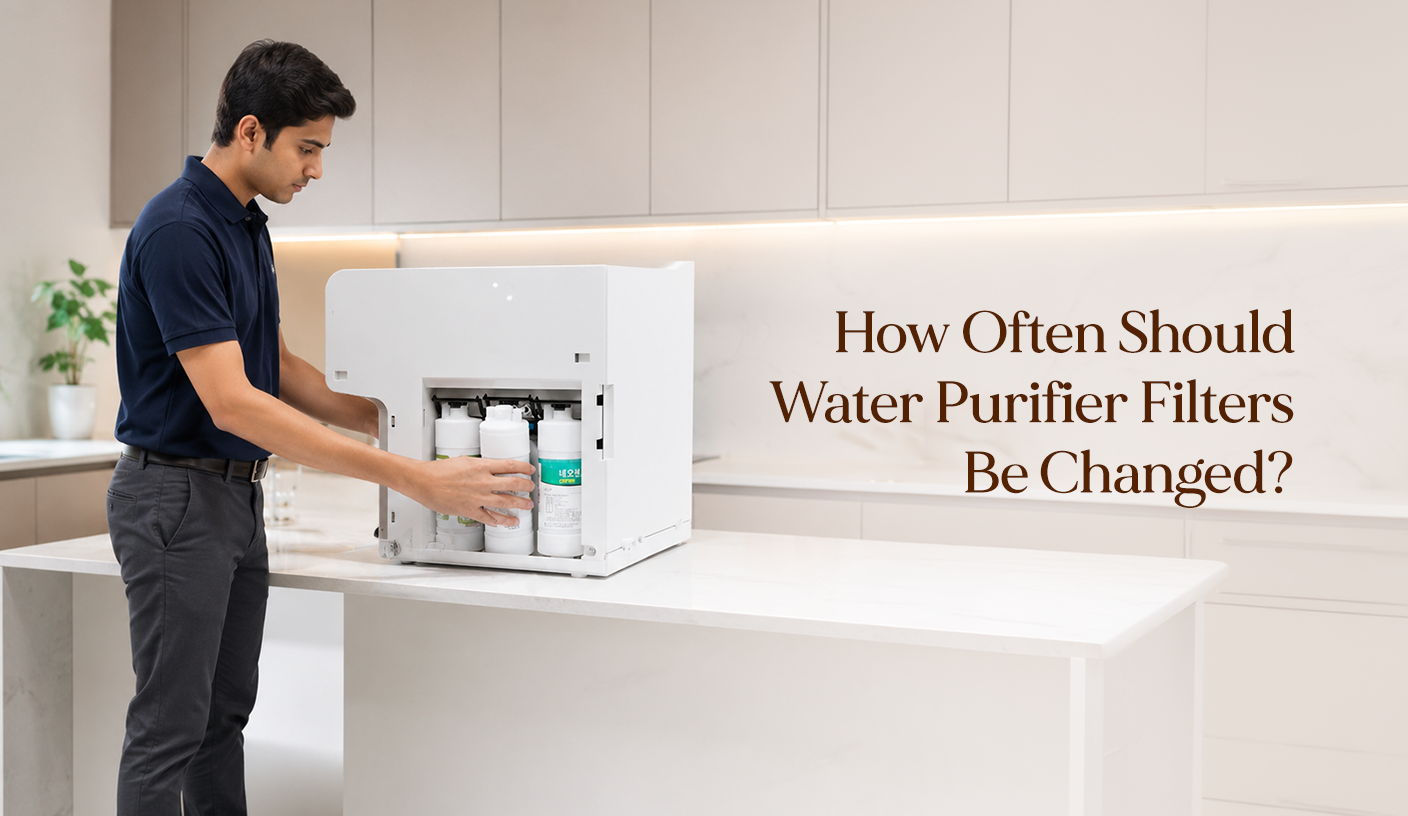
Most household water purifier filters typically need to be checked or replaced every 6-12 months, but the exact interval depends on the purifier model, filter type, water quality, and daily usage. A family of four using around 8-10 litres of purified water per day can process more than 3,000 litres of water annually, which can affect filter life.
The safest approach is to follow the manufacturer’s recommended replacement schedule and pay attention to signs such as reduced water flow, changes in taste or odour, filter alerts, or unusual purifier performance.
For households in Mumbai, where water sources and quality can vary between municipal, tanker, and borewell supplies, choosing the right filtration technology and maintaining filters regularly is particularly important.
In general, water purifier filters should be replaced or serviced approximately every 6-12 months. However, this is a guideline rather than a fixed rule.
The actual replacement frequency can vary depending on:
For example, imagine a four-member family that consumes approximately 9 litres of purified water every day.
That works out to:
9 litres × 365 days = 3,285 litres per year
So, the purifier may process more than 3,200 litres of water in a year. If the incoming water contains higher levels of sediment or other impurities, the filtration components may experience greater stress and require attention sooner.
This is why simply saying “change the filter once a year” isn’t appropriate for every household.
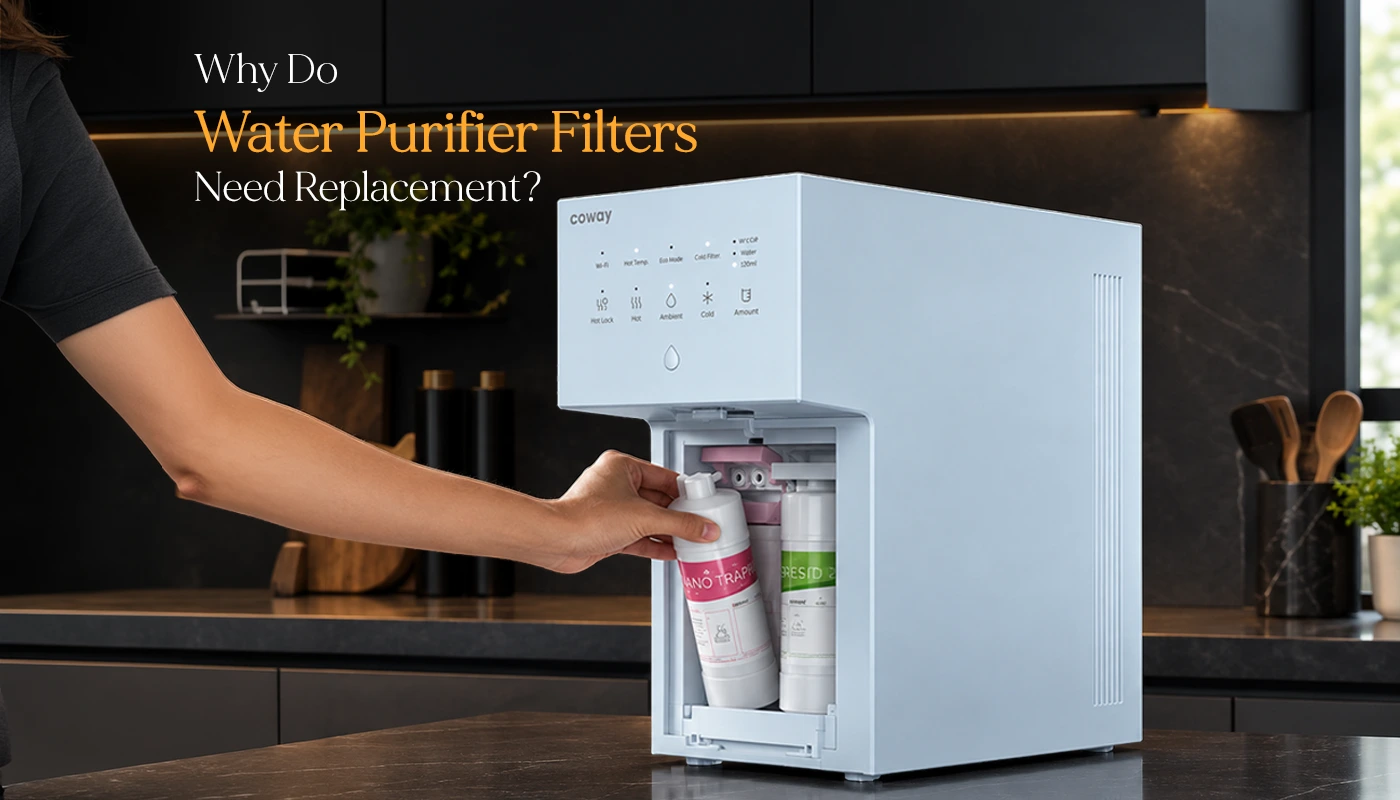
A water purifier does not simply store and dispense water. Its filtration components continuously work to reduce unwanted substances from the incoming water.
Different filters perform different functions.
A sediment filter, for instance, can capture suspended particles such as dust, sand, and rust. An activated carbon filter can help reduce chlorine, unpleasant odours, and certain organic compounds.
As filters are used, filtration media can gradually become saturated or clogged.
Consider a simple example. If a filter initially allows water to pass efficiently but gradually collects sediment over hundreds or thousands of litres, its ability to maintain the same flow can decline.
Continuing to use a filter beyond its recommended service life can therefore affect the purifier’s intended performance.
You don’t always have to wait for the scheduled replacement date to notice that your purifier needs maintenance.
One of the easiest signs to notice is reduced water flow.
If filling a glass previously took around 10 seconds but now takes 20-30 seconds, the filter could be clogged.
However, slow flow can also be caused by low water pressure, tubing problems, or other components. A professional inspection can determine the actual reason.
A noticeable change in the taste or smell of drinking water can indicate that the purification system needs attention.
For example, water that previously had a neutral taste may begin developing a noticeable chlorine-like taste or unusual odour.
Taste and smell should not, however, be considered a reliable test of water safety. Water can look, smell, and taste normal while still containing contaminants that cannot be detected by our senses.
Many modern purifiers provide filter-life indicators or maintenance alerts.
If your purifier displays a replacement notification, it is better to follow the manufacturer’s recommendation rather than continuing to use the filter simply because the water looks clear.
Suppose your apartment normally receives municipal water but starts using tanker water for several weeks.
The characteristics of the incoming water may change, potentially increasing the workload on the purifier.
A change in water source is therefore a good reason to reassess your purification and maintenance requirements.
Unusual noise, leakage, inconsistent water dispensing, repeated alerts, or other changes should not be ignored.
These problems may not necessarily be caused by the filter, so professional inspection is recommended before replacing components unnecessarily.
Yes. Daily water consumption can have a significant effect on how much work a purifier performs.
Consider two households.
Household A:
2 people × 4 litres/day = 8 litres/day
Household B:
5 people × 4 litres/day = 20 litres/day
Over one year:
The second household processes more than twice the amount of water.
This does not mean its filters will necessarily need replacement exactly 2.5 times as often. Filter capacity, water quality, purification technology, and operating conditions also matter.
However, the example clearly shows why filter replacement should consider usage as well as time.
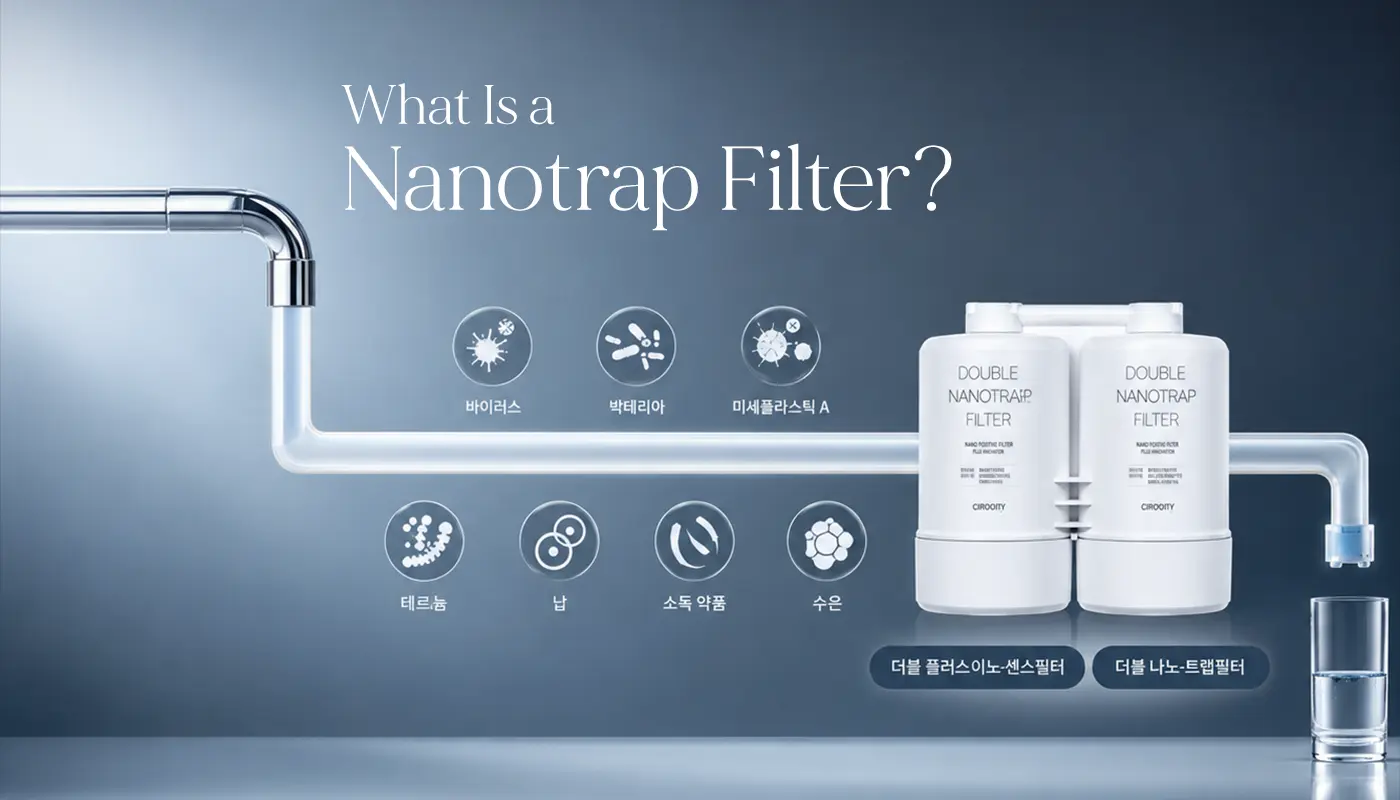
Modern water purification systems may use specialised filtration technologies designed to address different categories of impurities.
A Nanotrap filter is an example of specialised filtration technology. Instead of treating the purifier as one single component, it is useful to understand that different filtration stages can have different purposes and service requirements.
One filter may primarily handle larger particles, while another may target microscopic contaminants or improve water quality characteristics.
Because each technology works differently, filter replacement intervals can also vary.
This is why homeowners should always check the specific maintenance recommendations for their purifier rather than assuming every filter has the same lifespan.
Water conditions can differ considerably from one building or neighbourhood to another.
A household may receive municipal water, tanker water, borewell water, or a combination depending on local circumstances. In addition, water can come into contact with building storage tanks and internal plumbing before reaching the purifier.
For someone comparing the Best water purifiers in Mumbai, the decision should therefore go beyond price and appearance.
Consider factors such as:
A purifier that works well for one household may not necessarily be the best option for another.
Filters have a defined service life, so they cannot be used indefinitely. However, proper maintenance can help your purification system operate efficiently.
Keep the Storage Area Clean
If your purifier has a storage tank, follow the manufacturer’s instructions for cleaning and maintenance.
Don’t Ignore Maintenance Alerts
If the purifier indicates that a component requires attention, arrange maintenance instead of waiting for the purifier’s performance to deteriorate.
Understand Your Water
If you’re uncertain about your incoming water quality, consider getting it tested.
Parameters such as TDS, hardness, and microbial contamination can provide useful information about the characteristics of your water and help determine suitable purification technology.
Use the Correct Replacement Filters
Always use filters compatible with your specific purifier model. Using unsuitable components can affect performance and may compromise the system’s intended operation.
For many households, an annual maintenance check is a sensible starting point.
During a professional water purifier service, technicians can inspect the filter condition, water flow, connections, tubing, leakage, and other components.
However, the appropriate maintenance frequency depends on the purifier and household conditions.
If you have recently moved into a new home, changed your water source, or noticed changes in water quality, you may want to arrange an inspection earlier rather than waiting for the annual schedule.
If you’re purchasing a purifier for the first time, choosing a system based solely on advertisements or the number of purification stages can be confusing.
A water purifier consultation can help you understand what your household actually needs.
For example, a person living alone and consuming around 4 litres of drinking water per day may have very different requirements from a family of six consuming 20-25 litres daily.
Similarly, municipal water and borewell water can have different characteristics.
The goal should be to select purification technology based on your water source, water quality, consumption, and household requirements rather than simply choosing the most expensive model.
When searching for the best water filter, don’t focus exclusively on the initial purchase price.
Consider the complete ownership experience.
A good water filter system for home should be appropriate for your water conditions, provide suitable purification, and have manageable maintenance requirements.
Before making a decision, ask:
Answering these questions can help you make a more informed purchase.
Coway India focuses on water purification solutions designed around modern household requirements.
However, even the most advanced purifier requires appropriate maintenance. Filter replacement, system checks, and proper usage are essential for maintaining the intended performance of the purification system.
Instead of waiting until your water tastes different or the purifier develops a problem, follow the recommended maintenance schedule and pay attention to filter-life indicators.
The important point is that filter replacement isn’t determined by time alone.
Water quality and usage matter too.
For most households, 6-12 months is a useful general timeframe for checking or replacing purifier filters, but it should never be treated as a universal rule.
A household consuming 8 litres of purified water every day processes approximately 2,920 litres annually. A larger household consuming 20 litres daily processes approximately 7,300 litres.
Add differences in water quality and filter technology, and it becomes clear why replacement schedules can vary considerably.
The best approach is to understand your water, follow your purifier manufacturer’s recommendations, monitor filter indicators, and arrange timely maintenance.
With the right purification system and consistent care, you can make clean drinking water a reliable part of your everyday routine.